
01
Aiyinasi Factory
Planned centralized cassava-processing factory with modern equipment.
Kakuduro’s current project portfolio centers on factory development, agricultural expansion, farmer integration and value-added production in Ghana’s Western Region.
The company’s project pipeline reflects its stated strategy of diversification, vertical integration and business growth. The clearest documented initiatives are centered on the Aiyinasi factory, cassava cultivation, structured out-grower participation and coconut production.
This page intentionally uses only projects supported by the supplied company materials, leaving room for future projects to be added as new information becomes available.
Planned centralized cassava-processing factory with modern equipment.
Land acquired to strengthen raw-material supply for starch production and export.
Structured farmer registration, training, inputs, market access and logistics.
More than 50 acres of coconut plantation supporting oil production.
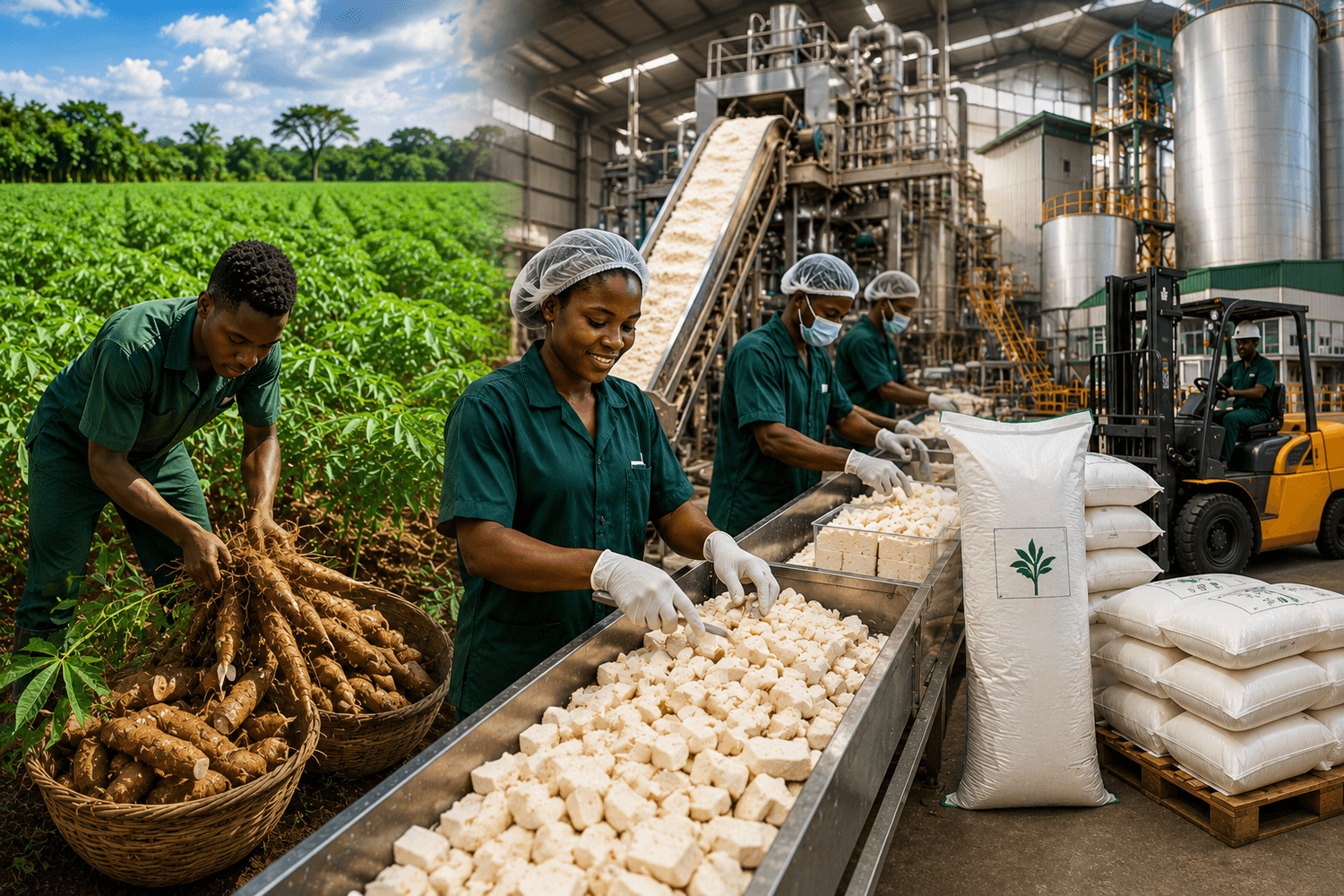
Kakuduro’s planned factory site at Aiyinasi in the Western Region is central to its strategy for modern cassava processing. The company profile describes a centralized production system using modern equipment.
The project is intended to increase processing capacity, support domestic and export markets, and contribute to direct and indirect employment.
Modernized factory production intended to improve efficiency and scale.
The company profile links the factory project to substantial direct and indirect job creation.
Processing capacity is intended to serve local food and industrial applications.
The company’s vision includes becoming a leading producer and exporter of cassava starch.
Factory rendering and factory-site plans are supplied in the company materials; a construction completion date is not stated.
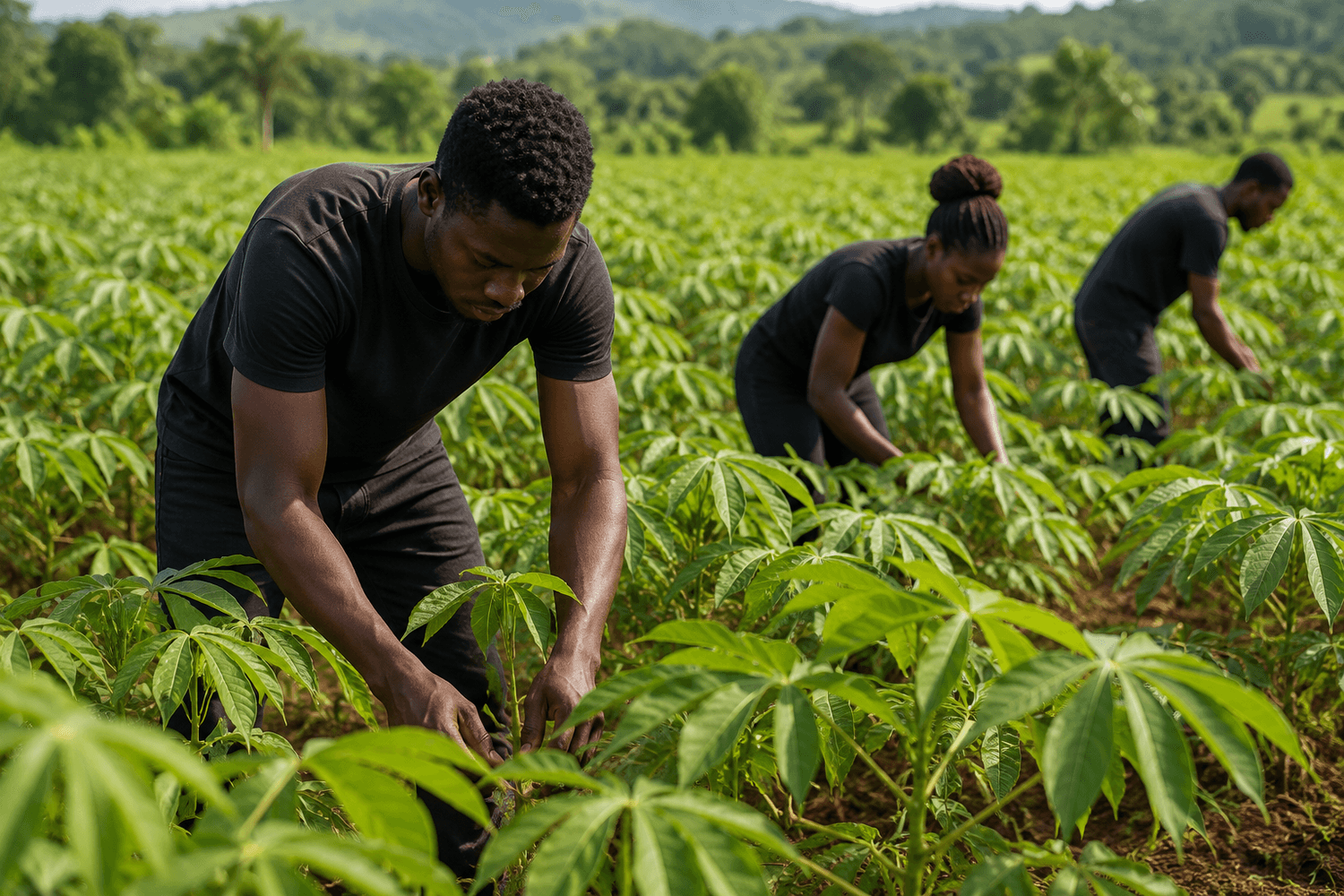
The company profile states that Kakuduro has acquired 450 acres of land for cassava starch production for export. This land base is a major part of the factory’s raw-material strategy.
The project supports a vertically integrated model in which farm production feeds directly into industrial processing.
Dedicated land helps create a more dependable cassava supply base.
Farm production and factory processing are designed to work as one value chain.
Cassava is positioned to be processed into higher-value starch products locally.
The land acquisition supports larger future production volumes.

The detailed out-grower structure is designed to establish a sustainable and profitable cassava supply chain for Kakuduro’s starch factory.
The programme covers farmer registration, agronomic training, access to inputs, mechanized support, harvesting coordination, quality control and prompt payment after delivery and inspection.
Best agronomic practices, pest management and post-harvest handling.
Access to planting materials, fertilizers and other inputs.
Kakuduro commits to purchasing cassava under pre-agreed pricing arrangements.
Payment is designed to follow delivery and quality inspection.
To create a dependable supply chain for the factory while improving farmer access to markets, inputs, training and income opportunities.
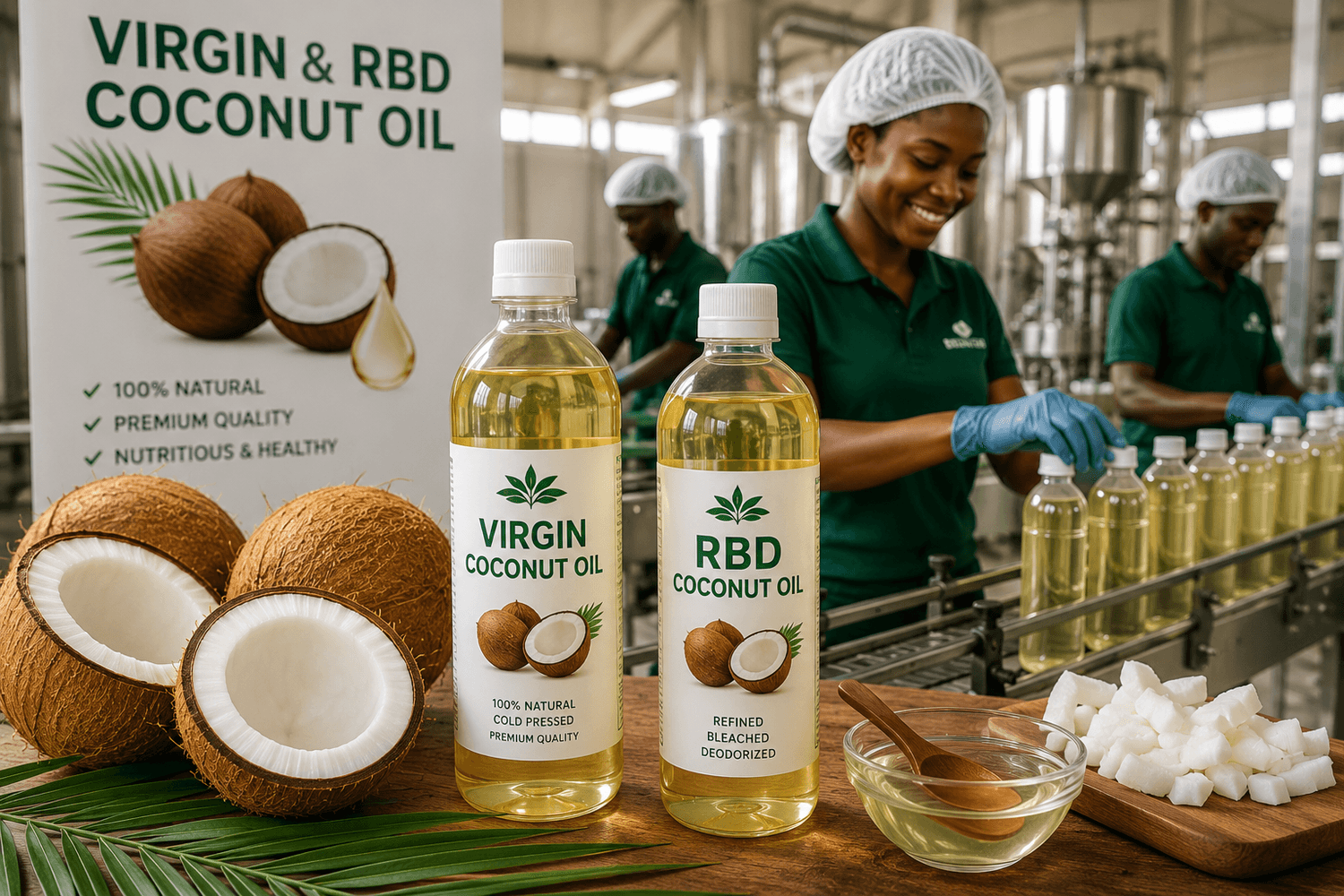
Kakuduro’s history includes indigenous coconut oil production at Aiyinasi. The company profile states that it currently has more than 50 acres of coconut plantation.
The supplied business artwork identifies both Virgin Coconut Oil and RBD Coconut Oil as production activities.
Dedicated coconut production supports raw-material availability.
Coconuts are positioned for processing rather than only raw sale.
The business began with local coconut oil production at Aiyinasi.
Virgin and RBD oils broaden the company’s manufacturing portfolio.
The documented projects are designed to reinforce one another across agriculture, farmer participation and industrial processing.
Dedicated cassava and coconut production creates a stronger agricultural base.
Out-grower partnerships increase supply and connect local farmers to the factory market.
Modern processing converts farm output into higher-value industrial products.
Production is positioned for domestic customers and future export opportunities.
We welcome partnerships in factory development, agricultural production, farmer support, equipment, technology, financing and market access.